Disclaimer: This post contains affiliate links. If you purchase through these links, I may earn a commission at no extra cost to you.
How to measure for bar stools correctly is one of the most important steps when planning kitchen island seating. Choosing bar stools isn’t just about style, it’s about proportion, comfort and usability. Just a minor mistake in two-inch measuring mistake can turn a beautiful kitchen island into an uncomfortable seating area. Stools that are too tall reduce proper legroom, on the other hand bar stools that are too short make the counter feel awkwardly high and strain posture over time.
It’s very easy to measure bar stools correctly once you understand what actually matters. A proper bar stool measurement guide always focuses on three things:
- Counter height
- Legroom clearance
- Island length
When bar stools are measured accurately, you will have an ideal seat height for kitchen island setups without any guesswork. This guide explains step by step the full process including legroom calculations, stool spacing rules, custom height counters and layout planning, so you can choose confidently without any trial and error.
How to Measure for Bar Stools Step by Step
Step 1- Measure Counter Height
Standard kitchen counters typically measure between 34 and 36 inches. Bar-height counters range from 40 to 42 inches. Anything above 43 inches is considered extra tall. However, many modern kitchens fall slightly outside these standards, especially in custom builds.
If your counter measures 37, 38, or even 39 inches, treat it as a custom height. That’s where understanding proper seat to counter distance becomes critical.
Auto Stool Height Calculator
Before diving into detailed measurements, you can use this quick calculator to estimate your ideal bar stool height. Enter your counter height below and compare the recommendation with the detailed steps that follow.
Bar Stool Height Calculator
Enter your counter height below to calculate the recommended stool height and ideal seat-to-counter distance.
The foundation of accurate stool sizing begins with one precise measurement: the full height from finished floor to the top surface of counter. This must be measured vertically using a tape measure, not estimated and not measured to the underside.
Real Measurement Examples
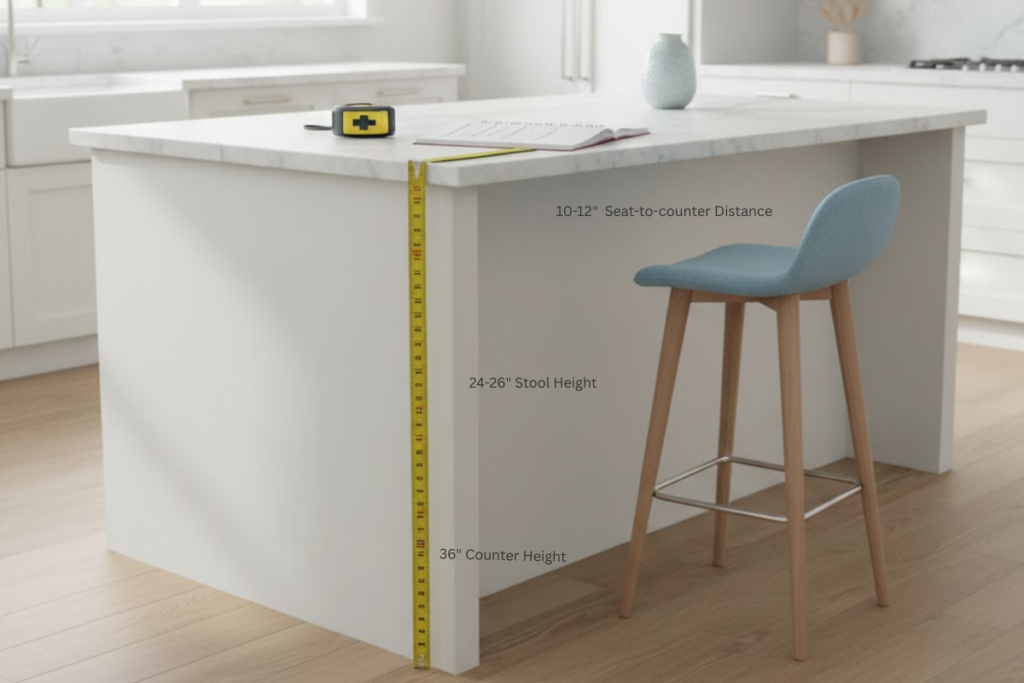
If your counter measures 36 inches, the ideal stool height will fall between 24 and 26 inches.
If your counter measures 38 inches, look for stools between 26 and 28 inches.
If your counter measures 41 inches, a 29 to 31-inch stool is typically correct.
In every case, the goal is to maintain a 10–12 inch seat-to-counter distance. That range creates proper bar stool legroom measurement and prevents knee crowding.
Flooring Thickness Consideration
Many homeowners forget to account for flooring upgrades. If you recently installed tile, hardwood overlays, or even thick luxury vinyl, your floor height may have increased slightly. Even a half-inch change affects overall legroom.
Always measure after flooring is fully installed, not before.
Countertop Overhang Depth
Overhang depth plays a surprisingly large role in comfort. Ideally, a kitchen island should have 10 to 12 inches of overhang for seating. This allows knees to sit naturally beneath the counter.
If the overhang is less than 8 inches, the cabinet frame may press against knees, making even correctly sized stools feel cramped. In such cases, stool spacing and placement must be adjusted carefully.
Step 2 – Measure Legroom and Seating Comfort
This step determines whether your stools feel inviting or restrictive.
Ideal Seat-to-Counter Distance
The correct seat-to-counter distance is typically 10 to 12 inches. This range allows natural posture, relaxed shoulders, and comfortable knee clearance when seated at a kitchen island. Less than 9 inches often feels tight and restricts movement, while more than 13 inches can make the seating position feel disconnected from the counter surface. According to the National Kitchen & Bath Association (NKBA), maintaining proper seating clearance is essential for both safety and comfort in residential kitchen design.
Proper bar stool legroom measurement ensures that users can sit for extended periods whether eating, working, or socializing without strain.
Footrest Placement Logic
Footrests should sit approximately 7 to 9 inches below the seat. This creates a natural knee bend between 90 and 100 degrees. If the footrest is too low, legs dangle and create pressure on the thighs. If too high, knees bend too sharply and reduce comfort.
Adjustable Stool Considerations
Adjustable stools can work well for custom counter heights but they must be evaluated properly. The ideal seat height for kitchen island setups should fall near the midpoint of the adjustable range not at the extreme maximum.
Relying on the highest extension often creates instability and improper posture.
Use this visual reference to compare your measured gap.
Compare your calculated seat-to-counter distance with the range shown above to confirm comfort.
Step 3 – Measure Island Length and Layout
Now that height and legroom are confirmed, it’s time to measure usable seating space.
Island Measurement Guidelines
Measure only the portion of the island intended for seating. Do not include sink areas, cooktops, structural panels, or decorative trim.
For L-shaped islands, measure each seating side independently. Avoid wrapping seating tightly around corners unless there is at least 18 inches of clearance beyond the corner edge. You can also use our printable worksheet at the end of this guide to record all measurements in one place.
Accurate island measurement ensures stools fit comfortably without crowding the layout.
In addition to measuring usable length correctly, proper stool spacing must also be considered. Most kitchen islands allow approximately 24 inches of width per stool for comfortable seating. For wider stools or added elbow room, 26–30 inches per stool provides extra comfort. Proper stool spacing prevents elbow crowding and improves overall seating comfort.
Waterfall Edge Impact
If your island features waterfall sides, subtract the panel thickness from total usable width. Even a 1.5-inch stone panel reduces seating capacity noticeably.
Island Layout Planner
Island Layout Planner
Enter your island length and stool width to estimate how many stools fit comfortably.
Use this planner alongside your island measurement to confirm both stool count and proper stool spacing before purchasing.
Choosing Stool Height Based on Your Measurements
Once you have measured your counter height accurately, subtract 10 to 12 inches. That number represents your target seat height range.
This simple formula works for both standard and custom heights. Maintaining that consistent seat to counter distance ensures comfort, alignment and proper legroom.
If you are unsure whether your kitchen requires counter or bar height seating, refer to our detailed comparison guide Bar Stool vs Counter Stool.
Commercial vs Residential Measurement Differences
Commercial environments such as bars and restaurants typically allow 28 to 30 inches per stool for spacing. Residential kitchens often function comfortably with 24 to 26 inches per stool.
Commercial stools are also wider and heavier-duty, which affects layout planning. When measuring for residential use, comfort and movement flow are the primary priorities.
Quick Measurement Checklist
- Measure floor to counter top
- Subtract 10–12 inches
- Confirm overhang depth
- Measure usable island width
- Allow 24–30 inches per stool
Free Bar Stool Measurement Worksheet
Prefer measuring on paper while checking your kitchen layout? Download our printable Bar Stool Measurement Worksheet to record counter height, legroom, stool spacing and stool count in one place.
No email required.
Frequently Asked Questions (FAQ)
Conclusion
Measuring for comfortable bar stools is less about memorizing numbers and more about understanding proportions. When counter height, seat-to-counter distance, and island spacing align properly, the entire kitchen layout feels intentional and comfortable.
Take your time to measure carefully. Small inaccuracies can lead to discomfort, while precise measurements create seating that feels built for the space.
Use the calculator tools above, compare your legroom visually, and confirm your spacing before purchasing. When done correctly, your stools will fit seamlessly both visually and functionally. When you understand how to measure for bar stools properly, choosing the right height and spacing becomes simple and accurate. If you’re unsure about exact stool heights, see complete bar stool height guide.
Best Bar Stools for Kitchen Islands
Choosing the best bar stools for kitchen island setups isn’t as simple as picking what…
The 8 Best Budget Bar Stools Under $200
Good bar stools do not have to cost $300 or more. Many budget bar stools…
How to Measure for Bar Stools
How to measure for bar stools correctly is one of the most important steps when…
How Many Bar Stools Fit at Island?
How many bar stools fit at island seating depends on more than the island length….
How tall should Bar Stools Be
How tall should bar stools be? The correct height depends entirely on the counter surface…
Standard Bar Stool Height Guide
Standard bar stool height is not a style preference. It is a proper measurement rule….