
Disclaimer: This post contains affiliate links. If you purchase through these links, I may earn a commission at no extra cost to you.
Bar stools look simple, just a seat and a frame. Yet the wrong height or spacing can make a kitchen feel awkward every day.
A Most Comfortable Bar Stools that is slightly too tall forces your shoulders to lift unnaturally. One that is slightly too low makes you lean forward to reach the counter. Add one extra seat to an island, and suddenly the entire layout feels cramped. Small measurement mistakes quietly change how a space functions.
Bar stools are not just decorative seating. They shape posture, movement, conversation, and how long people comfortably remain seated. Getting the proportions right matters more than most homeowners expect.
Before choosing style or material, it helps to understand a few fundamentals:
• The correct bar stool height for your counter
• The difference between counter and bar height stools
• How much space each seat requires
• How legroom affects long-term comfort
• What makes a stool supportive for daily use
This guide explains those standards clearly so you can choose bar stools that fit properly and feel right every time you sit down.
The Three Standard Bar Stool Heights
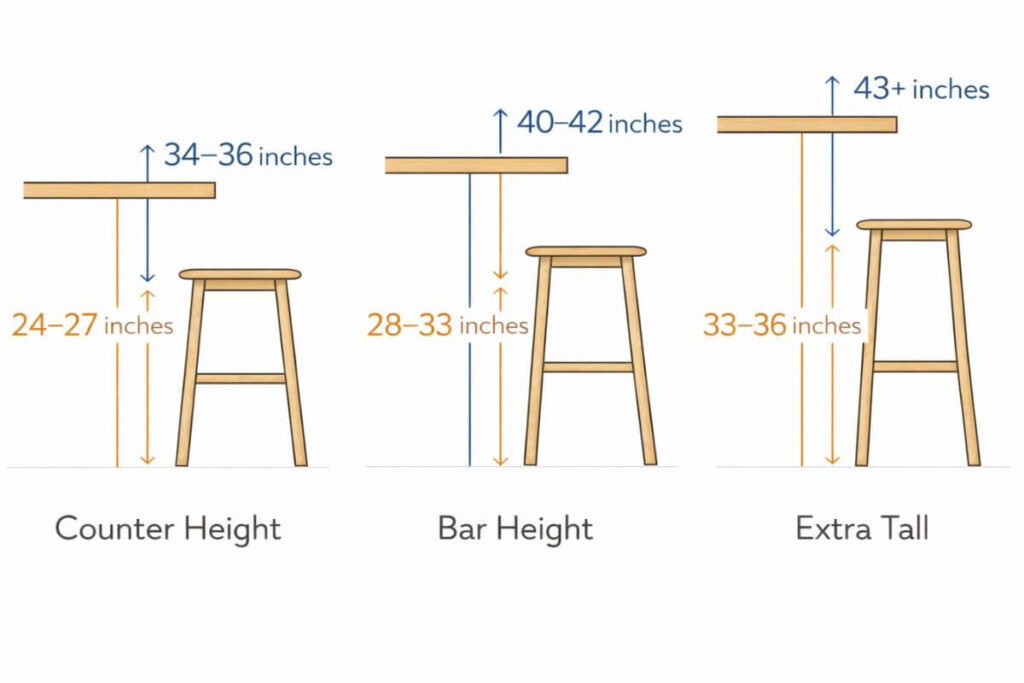
Choosing the correct bar stool height is the foundation of comfort. Every other design decision depends on getting this measurement right.
Most residential counters fall into three standard height categories. Each requires a specific seat height range to maintain proper legroom and posture.
Standard Stool Height Reference Chart
| Counter Height | Recommended Seat Height | Ideal Seat to Counter Clearance |
|---|---|---|
| 34 to 36 inches | 24 to 27 inches | 10 to 12 inches |
| 40 to 42 inches | 28 to 33 inches | 10 to 12 inches |
| 43 inches and above | 33 to 36 inches | 10 to 12 inches |
The 10–12 inch clearance between seat and counter is what keeps posture natural and shoulders relaxed.
Here’s how each category functions in real spaces.
Counter Height
Counter height surfaces measure between 34 and 36 inches from the floor.
These require seat heights between 24 and 27 inches.
This setup is most common in kitchen islands. When sized correctly, seating feels balanced and natural. When sized incorrectly, it feels either cramped or disconnected from the surface.
Bar Height
Bar height counters measure between 40 and 42 inches.
They require seat heights between 28 and 33 inches.
The extra elevation changes how your arms rest on the surface, making proper footrest placement even more important. Without support, legs may feel suspended during longer sitting sessions.
Extra Tall Stool
Counters measuring 43 inches or higher require seat heights between 33 and 36 inches.
This category appears in custom bars and entertainment spaces. Measurement accuracy matters even more here because small errors feel exaggerated at greater heights.
How to Measure Your Counter Correctly?
Accurate measurement prevents most sizing mistakes. Guesswork leads to discomfort and unnecessary returns.
There are three principles that determine proper fit.
Legroom Formula
A simple working formula keeps measurements clear:
Counter height minus approximately 10 inches equals the ideal seat height.
This typically results in 10–12 inches of clearance, supporting natural thigh movement and proper elbow alignment.
For example:
• 36 inch counter works best with a 26 inch seat height
• 42 inch counter works best with a 30 inch seat height
The formula works because it protects legroom.
Ideal Seat-to-Counter Distance
The most comfortable seat-to-counter distance falls between 10 and 12 inches.
That clearance allows:
• Relaxed shoulders
• Comfortable knee placement
• Natural elbow positioning
• Balanced posture
Less than 9 inches often feels tight.
More than 12 inches may feel disconnected.
Clearance determines comfort more than appearance.
Common Height Mistakes
Incorrect measurements are the most common issue with bar stools.
Measuring only to the top surface
Always measure to the lowest obstruction beneath the counter, such as support beams.
Buying based on appearance instead of numbers
What looks correct in photos may not match your counter height.
Mixing counter height and bar height stools
They are not interchangeable, even if the visual difference seems small.
Ignoring overhang depth
If the counter overhang is shallow, knees will hit the cabinet face even if height is correct.
Focusing on overall stool height
Seat height determines comfort, not the top of the backrest.
Practical Example
Real measurements make these standards easier to understand.
If your kitchen island measures 36 inches high, your ideal seat height falls between 24 and 26 inches. That creates approximately 10 to 12 inches of clearance, keeping elbows level with the surface and legs comfortable beneath the counter.
If your home bar measures 42 inches high, your ideal seat height is typically between 29 and 31 inches. Anything significantly lower will feel disconnected and force you to lean upward to rest your arms.
Applying these measurement standards removes guesswork and prevents uncomfortable setups.
Types of Bar Stools
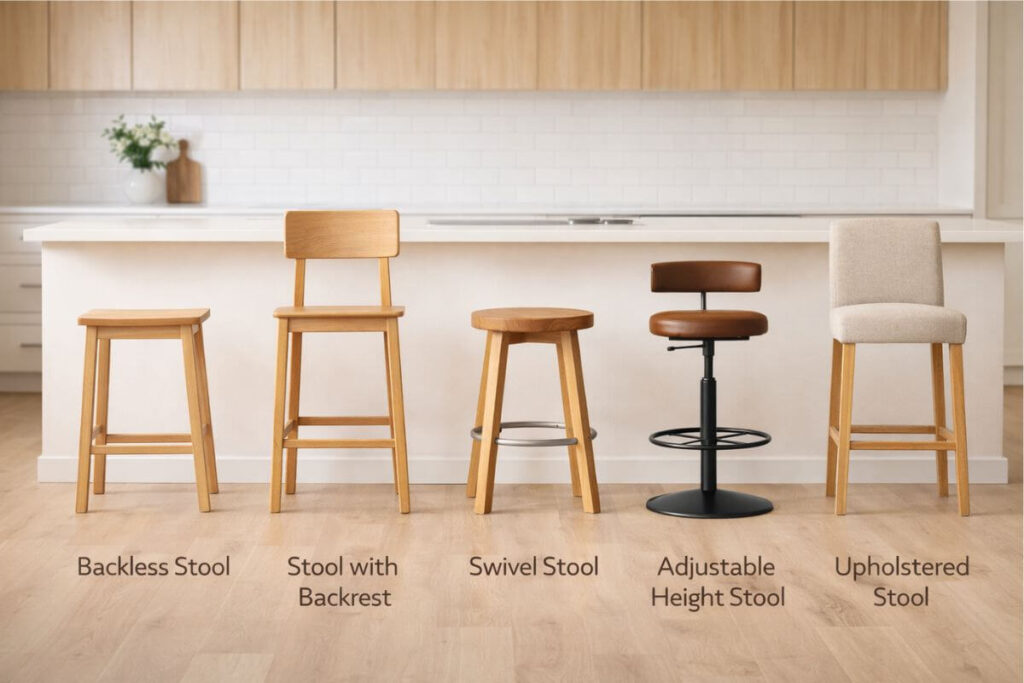
Once height is determined, the next decision is structure. The type of bar stool you choose influences both how your kitchen looks and how comfortable it feels during daily use.
Some styles prioritize space efficiency. Others are designed for longer sitting comfort. Understanding these differences prevents choosing based on appearance alone.
Backless Bar Stools
Backless bar stools feature a simple seat without upper support. Their minimal profile keeps sightlines open and reduces visual clutter, making them especially effective in compact kitchens.
Because they tuck fully under the counter, they help maintain clear walkways and make smaller islands feel less crowded.
- Slide fully under the counter
- Maintain an open visual layout
- Easy to reposition
- Ideal for narrow kitchens
- No upper back support
-
Less comfortable for extended sitting
Best use
Backless stools work well in apartments, smaller homes, and spaces where seating is used briefly rather than for long meals.
Bar Stools with Backs
Bar stools with backs create a more defined seating area. They visually anchor the island and make it feel like a dedicated dining zone rather than just a prep surface.
A backrest improves posture support and allows people to remain seated longer without fatigue.
Comfort benefits
- Improves lower back support
- Encourages longer sitting sessions
- Feels more stable and secure
Who should choose this type
Homes that use the island daily for meals, homework, or entertaining benefit most from stools with backs. They are also more comfortable for older family members.
For further recommendations, see Best Bar Stools with Backs.
Swivel Bar Stools
Swivel bar stools add functional movement to the seating experience. Instead of pulling the stool backward, you rotate smoothly to enter or exit.
This becomes especially useful in busy kitchens where spacing between stools is limited.
360-Degree Swivel
A full rotation allows easy entry and exit without dragging the stool across the floor. Ideal for tighter seating layouts.
Limited Motion Swivel
Partial rotation provides movement while maintaining greater stability, which can feel more controlled in family environments.
Swivel stools work best in active spaces where people frequently shift between counter and prep areas.
Adjustable Bar Stools
Adjustable bar stools provide height flexibility, making them suitable for multipurpose areas or homes with varying counter heights.
Most models use a gas lift mechanism operated by a lever beneath the seat, allowing smooth height changes without tools.
Height Range Considerations
Always verify the minimum and maximum seat height before purchasing. Not every adjustable stool fits both counter height and bar height ranges.
Adjustable stools are helpful when multiple users prefer slightly different seating positions.
Upholstered vs Non-Upholstered Stools
Material selection affects both comfort and maintenance. The right choice depends on how long people typically sit and how often spills occur.
Comfort Differences
Upholstered bar stools provide cushioning that supports longer meals and conversations. High-density foam retains structure, while softer padding offers a plush feel.
Non-upholstered stools feel firmer and more architectural. They suit modern and industrial interiors and are easier to maintain.
Maintenance
Fabric requires regular cleaning attention. Leather and faux leather wipe clean easily. Wood and metal surfaces are simplest to maintain but provide less cushioning.
Type Comparison Overview
| Type | Best For | Comfort Level | Space Saving |
|---|---|---|---|
| Backless | Small kitchens | Moderate | High |
| With Backs | Long sitting | High | Moderate |
| Swivel | Easy movement | Moderate to High | Moderate |
| Adjustable | Flexible height needs | Moderate | Moderate |
| Upholstered | Extended comfort | High | Varies |
How to Decide Quickly
Choosing between types becomes easier when you focus on how the stool will actually be used.
- For compact kitchens, choose backless stools that tuck completely under the counter and keep walkways clear.
- For long meals and daily use, select stools with supportive backs and cushioning to improve comfort.
- For tight or busy seating areas, consider swivel designs that allow smooth entry and exit without dragging.
- For homes with varying counter heights or multiple users, adjustable stools provide practical flexibility.
Keeping these priorities in mind simplifies the decision and prevents buying based on appearance alone.
Choosing the Right Material for Bar Stools
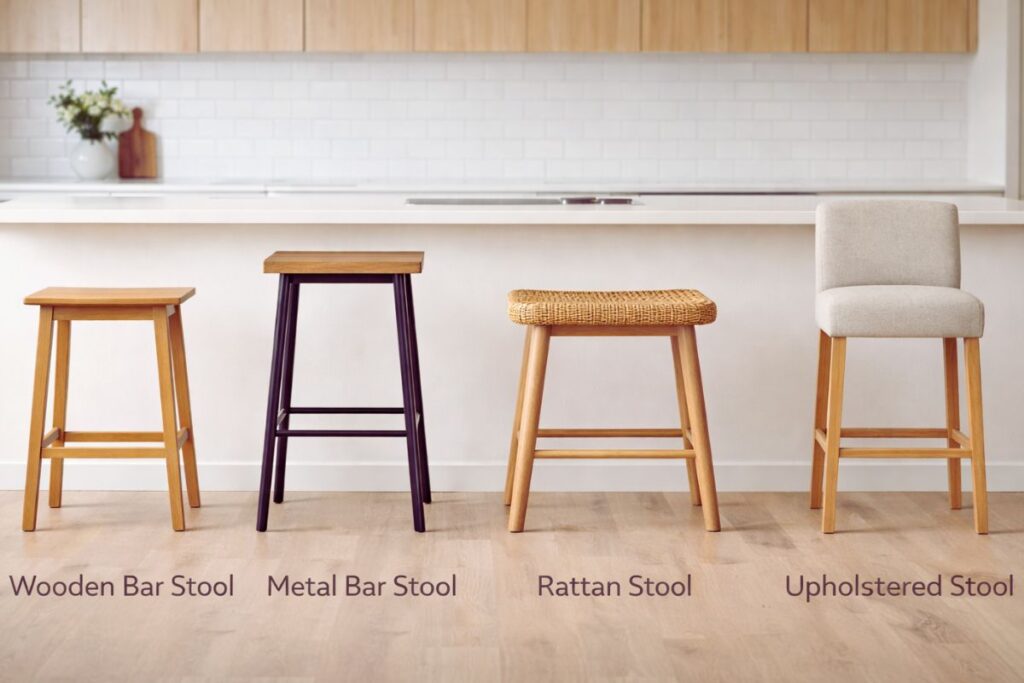
Material affects how bar stools look, how they wear over time, and how comfortable they feel during daily use. While height determines fit, material determines long term satisfaction.
The right choice depends on lifestyle, cleaning habits, and how often the seating area is used. Some materials emphasize durability while others prioritize warmth or comfort.
Understanding these differences makes choosing bar stools easier and more intentional.
Wooden Bar Stools
Wood brings warmth and familiarity to a kitchen. It suits farmhouse, transitional, and classic interiors where natural textures soften the overall look.
Solid wood frames offer long term durability when properly constructed. Hardwood varieties such as oak and maple resist wear better than softer woods. Over time wood develops subtle character which many homeowners appreciate.
Wooden bar stools feel sturdy and grounded. However they may show scratches or dents in high traffic homes, especially if finished with lighter stains.
Best suited for
• Traditional kitchens
• Warm interior styles
• Homes prioritizing natural materials
• Kitchen islands used daily for family meals
Metal Bar Stools
Metal bar stools introduce a cleaner and more structured appearance. They work especially well in modern, industrial, and minimalist kitchens.
Steel frames and powder coated finishes provide excellent durability. Metal structures typically support higher weight capacity which makes them a practical option for heavy daily use.
Because metal frames are often slimmer they can improve bar stool spacing in tighter layouts. Visually they feel sharper and more architectural than wood.
Best suited for
• Modern interiors
• Industrial style kitchens
• High traffic households
• Narrow islands where slimmer frames help spacing
Rattan Cane and Wicker Stools
Rattan, cane, and woven wicker materials add texture and lightness. They soften the appearance of bar stools and create a relaxed atmosphere.
These materials help larger kitchen islands feel less heavy visually. However woven seats may require more careful handling compared to solid wood or metal frames.
Rattan bar stools bring a natural and airy quality that pairs well with lighter color palettes.
Best suited for
• Coastal interiors
• Casual family kitchens
• Spaces seeking visual softness
• Homes that prioritize texture and warmth
Upholstery Types
Upholstery affects both comfort and maintenance. While all upholstered bar stools add softness compared to solid wood or metal seats, each material behaves differently over time.
Choosing the right covering ensures your bar stools remain practical for everyday use while still matching your interior style.
Fabric
Fabric upholstered bar stools provide warmth and visual softness. They are available in a wide range of textures and colors which makes coordination easier in design focused kitchens.
Fabric feels comfortable during longer sitting sessions. However it may absorb spills more easily than leather or vinyl, especially in busy households. Performance fabrics with stain resistance are a better option for daily use.
Best suited for
• Comfortable family kitchens
• Design driven interiors
• Moderate daily use
Leather
Leather bar stools offer durability and a refined appearance. Genuine leather resists minor spills and can be wiped clean quickly which makes it practical for kitchen island seating.
Over time leather develops character and remains structurally strong when properly maintained. It works well in both modern and transitional interiors.
Best suited for
• High traffic kitchens
• Easy maintenance needs
• Daily island seating
PU Leather
PU leather is a synthetic alternative that mimics the look of genuine leather at a lower cost. It is smooth and easy to clean which makes it practical for regular use.
While it does not age as naturally as real leather, it offers a balanced option for homeowners seeking affordability and easy upkeep.
Best suited for
• Budget conscious upgrades
• Contemporary kitchens
• Moderate usage
Vinyl
Vinyl is highly resistant to moisture and staining. It is often selected for durability rather than luxury feel.
Vinyl surfaces wipe clean easily and handle spills well. They may feel firmer than fabric but are extremely practical in busy environments.
Best suited for
• Homes with children
• Spill prone seating areas
• Very high traffic kitchens
Material Comparison Overview
| Material | Durability | Maintenance | Comfort Level | Style Impact |
|---|---|---|---|---|
| Wood | High | Moderate | Moderate | Warm and classic |
| Metal | Very high | Low | Moderate | Modern and industrial |
| Rattan | Moderate | Moderate | Moderate | Light and textured |
| Upholstered | Varies | Varies | High | Comfortable and soft |
How to Choose the Right Material
Choosing material becomes easier when you prioritize how the bar stools will actually be used.
- For high traffic kitchens prioritize metal or solid hardwood frames for durability.
- For extended seating comfort choose upholstered bar stools with supportive cushioning.
- For warm interior styles wood introduces balance and visual softness.
- For low maintenance needs leather or metal surfaces simplify cleaning.
Selecting material based on lifestyle ensures your bar stools remain comfortable and functional over time.
Choosing Bar Stools for Your Space
Bar stools should complement not only your counter height but the way the space is actually used. A kitchen island where children eat breakfast daily requires a different approach than a quiet home bar used on weekends.
Before choosing style, think about movement, traffic flow, and how long people typically sit.
For Kitchen Islands
Kitchen islands often serve multiple purposes. They function as prep surfaces, casual dining spots, homework stations, and conversation hubs.
For a standard 36 inch island counter counter height stools between 24 and 27 inches usually provide proper clearance. Maintaining 10 to 12 inches between the seat and counter helps keep posture natural.
Spacing is just as important. Most islands require about 24 to 26 inches per stool. Adding one extra seat may seem efficient but it often makes the entire setup feel cramped.
If your island is used daily for meals consider stools with supportive backs or light cushioning. Comfort becomes noticeable over time.
Best approach for kitchen islands
• Match stool height carefully
• Allow proper spacing between seats
• Prioritize comfort for everyday use
For Home Bars
Home bars create a different atmosphere. They are usually taller and slightly more defined as a social zone.
Bar height counters around 40 to 42 inches require seat heights between 28 and 33 inches. Because people often sit longer at a bar footrest placement becomes especially important.
Unlike kitchen islands, home bars can handle more statement designs. Metal frames or leather finishes often complement the setting and create a more intentional look.
Best approach for home bars
• Use proper bar height stools
• Ensure stable footrest support
• Choose materials that match the mood of the space
For Small Apartments
In compact layouts visual weight matters as much as measurements. Heavy backed stools can overwhelm a small kitchen.
Backless or slim frame bar stools keep sightlines open and make the space feel larger. Being able to slide stools fully under the counter improves daily movement and prevents clutter.
Narrower seat widths can also improve bar stool spacing when the island length is limited.
Best approach for small apartments
• Choose visually light designs
• Avoid oversized seats
• Keep walkways clear
For Heavy Individuals
Weight capacity should always be verified rather than assumed. Many standard residential bar stools support between 250 and 300 pounds while heavy duty models are designed for greater capacity.
Look for solid hardwood construction, welded metal frames, and reinforced joints. Wider seat dimensions improve both comfort and stability.
Selecting bar stools with appropriate weight ratings ensures long term safety and durability.
Best approach for higher weight needs
• Check official weight capacity
• Choose reinforced frames
• Prioritize stability over slim design
| Space Type | Height Focus | Comfort Priority | Design Tip |
|---|---|---|---|
| Kitchen Island | Counter height stools | Medium to High | Balance spacing and support |
| Home Bar | Bar height stools | Medium | Stronger visual presence |
| Small Apartment | Precise fit | Moderate | Keep profile slim |
| Heavy Duty Use | Verified seat height | High | Reinforced frame |
Comfort Factors That Actually Matter
Bar stools can meet every measurement standard and still feel uncomfortable. True comfort depends on proportion, support, and posture not appearance alone.
Seat dimensions, cushioning quality, and footrest placement determine how long someone can sit without strain.
Seat Width and Depth
Seat width affects how relaxed a person feels while sitting. Narrow seats restrict natural movement, while wider seats offer more room but require additional island spacing. In tighter kitchens increasing seat width can quickly reduce usable layout space.
Seat depth plays an equally important role.
Why deeper seats ≠ better
A deeper seat may seem more comfortable at first glance, but excessive depth can push the body forward and reduce lower back support. When the seat is too deep, users often lean forward to compensate, creating subtle tension over time.
Balanced depth supports the thighs without forcing posture adjustment. The goal is proportional support not oversized dimensions.
Cushioning
Cushioning determines how the stool performs over months of use rather than in the first few minutes.
Foam types
High density foam maintains its structure longer and resists sagging. Lower density foam may feel softer initially but tends to compress more quickly under daily use.
Firmness levels
Very soft cushions can create a sinking feeling which shifts posture forward. Moderate firmness provides more consistent support and typically performs better in kitchens where bar stools are used regularly.
Comfort comes from steady support rather than exaggerated softness.
Footrest Design
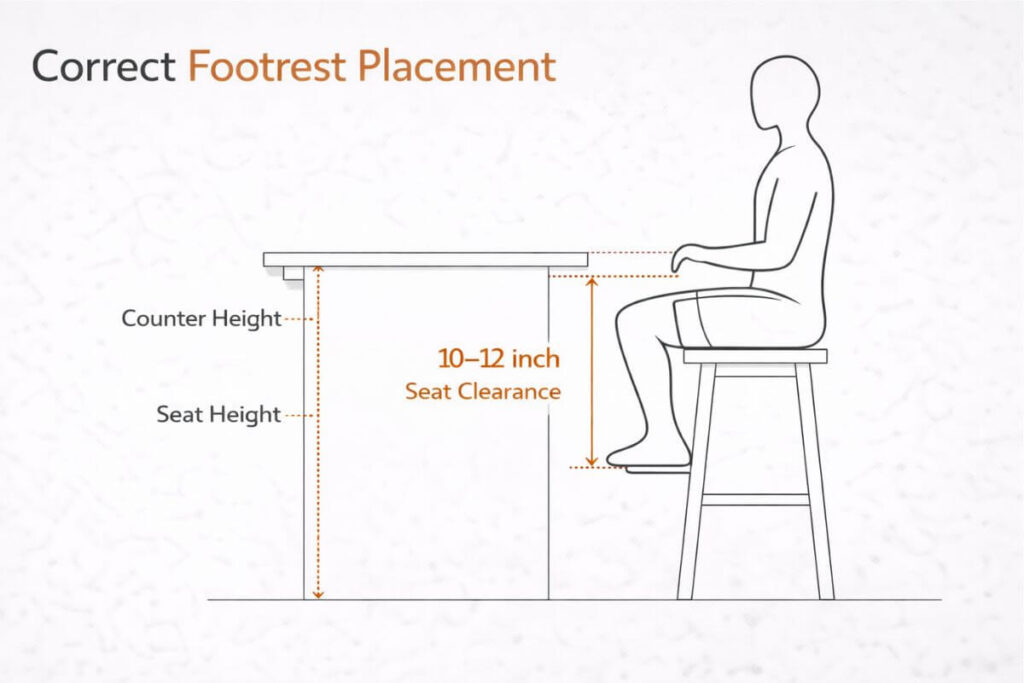
Footrests influence posture more than most people realize. Proper leg support reduces strain and keeps the body balanced at the counter.
Optimal height
The footrest should allow knees to bend naturally without lifting the thighs too high or leaving feet unsupported. Its position must align with the overall bar stool height and the 10 to 12 inch seat to counter clearance.
Comfort angles
When legs rest at a comfortable angle the spine remains more neutral. If the footrest is too low pressure shifts upward. If it is too high posture becomes compressed.
Well positioned footrests contribute significantly to long sitting comfort.
Styling Your Bar Stools
After height and comfort are settled, style becomes the visible layer. Bar stools quietly shape the mood of a kitchen. The wrong style feels disconnected. The right one makes the island look intentional.
Instead of chasing trends, it helps to understand what each design direction actually communicates.
Modern Bar Stools
Modern bar stools are defined by restraint. Clean silhouettes, minimal lines, and slim proportions keep the focus on the architecture of the kitchen rather than on decorative detail.
You’ll often see metal frames paired with faux leather seating. The metal keeps the structure sharp and durable while faux leather maintains a smooth, understated finish that is easy to maintain. This combination works especially well in kitchens with flat panel cabinetry and matte finishes.
Modern designs are not loud. They succeed by staying visually light and precise.
Farmhouse Bar Stools
Farmhouse bar stools lean into warmth. Rustic wood finishes, visible grain, and slightly textured surfaces create a more welcoming atmosphere.
Cross-back designs are common in this style. They add character without making the stool feel ornate. The structure feels traditional yet practical, which is why farmhouse bar stools integrate easily into kitchens with shaker cabinets and natural wood accents.
This style softens the island and makes it feel more like a gathering table than a prep counter.
Industrial Bar Stools
Industrial bar stools emphasize structure and material honesty. Metal frames are often exposed rather than hidden, and darker finishes give the seating area a stronger visual presence.
A distressed look, whether through aged metal or reclaimed wood seats, adds texture rather than polish. These stools feel purposeful rather than decorative.
Industrial styles are particularly effective in open layouts or kitchens with concrete, brick, or darker countertops where contrast adds depth.
How Many Bar Stools Can Fit
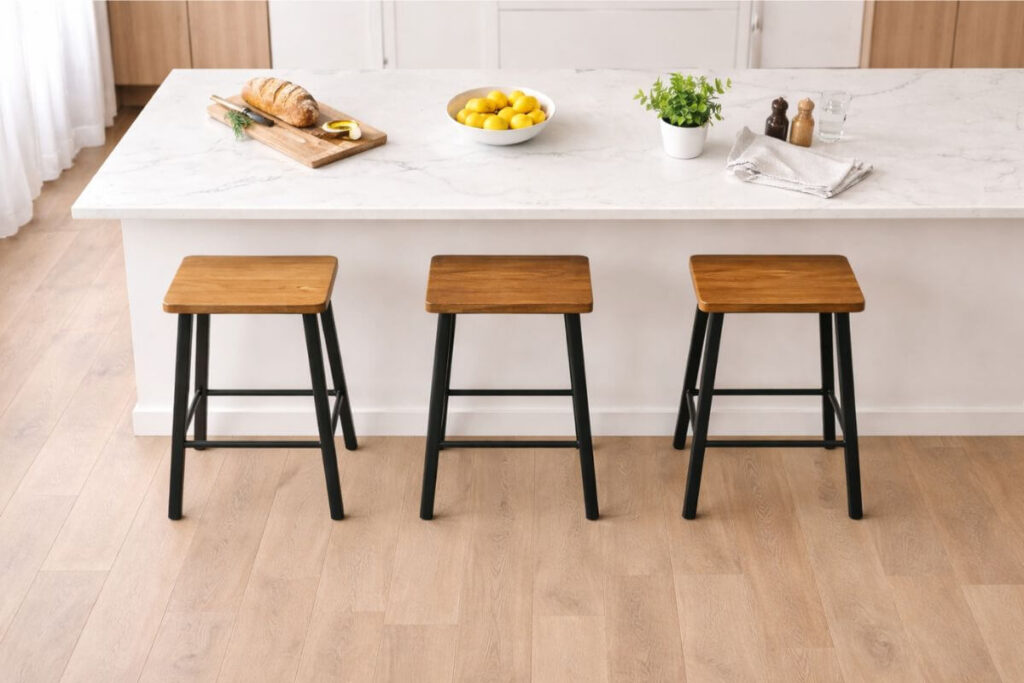
One of the most common mistakes with bar stools is trying to fit one too many along the island. More seats do not always mean better seating.
Comfort depends on spacing just as much as height. Without enough room between stools people bump elbows and feel crowded.
Before deciding on quantity measure the usable length of your counter and apply a simple spacing rule.
Spacing Formula (Simple)
A reliable guideline is to allow 24 to 26 inches of width per stool. This includes the seat itself plus a small gap between stools.
This spacing guideline protects both physical comfort and visual balance. Even if a seat measures 17 inches wide, you still need additional space so people can sit comfortably without touching shoulders.
For example
A 72 inch island can usually fit three stools comfortably.
A 96 inch island may fit three to four depending on seat width.
Trying to squeeze four stools into 72 inches often reduces comfort significantly.
Armchair spacing requires even more room. Stools with arms need extra clearance so the arms do not collide. In those cases plan closer to 28 to 30 inches per seat.
Backrest spacing also matters. High back stools create visual and physical bulk. Even when the seat width is moderate, tall backs can make seating feel tighter if spacing is not generous.
Spacing Reference Guide
| Island Length | Typical Stool Count | Notes |
|---|---|---|
| 48 inches | 2 stools | Compact layout |
| 60 inches | 2 to 3 stools | Depends on seat width |
| 72 inches | 3 stools | Comfortable standard |
| 84 inches | 3 to 4 stools | Check spacing carefully |
| 96 inches | 4 stools | Works with slimmer designs |
When in doubt leave slightly more space rather than less. Comfortable seating always feels intentional. Crowded seating feels forced.
Quick Checklist Before Buying
By this stage you know the correct bar stool height, spacing requirements, material differences, and comfort factors. The final step is making sure nothing small has been overlooked.
Most returns happen because of simple measurement errors or spacing assumptions. Use this checklist before finalizing your choice.
Quick Checklist Before Buying
- Seat height matches your exact counter measurement
- 10–12 inches of clearance between seat and counter
- At least 24 inches of horizontal space per stool
- Total stool width does not overcrowd the island
- Footrest supports a relaxed leg position
- Frame construction suits daily use
- Weight capacity is clearly verified
- Upholstery matches realistic maintenance expectations
- Style complements cabinetry and finishes
Frequently Asked Questions (FAQ)
Conclusion
Choosing bar stools ultimately comes down to proportion. When seat height aligns with counter height, spacing allows comfortable movement, and materials match daily use, seating feels natural rather than forced.
Small measurement differences can change how a kitchen functions. A stool that is slightly too tall or slightly overcrowded may feel fine at first but uncomfortable over time. Applying clear height and spacing rules prevents those issues.
Style should complement structure. Whether you prefer modern minimal lines, rustic wood finishes, or industrial metal frames, design should support the layout not compete with it.
When height, spacing, comfort, and material work together, bar stools integrate seamlessly into the space. They support daily routines and conversations without drawing attention to themselves.
Well-chosen bar stools simply fit.
The Complete Guide to Most Comfortable Bar Stools
Bar stools look simple, just a seat and a frame. Yet the wrong height or…

Best Valentine Gifts for Her
Getting the best Valentine gifts for her 2026 isn’t about getting something at the last…

Best Valentine Gifts for Him
Are you looking for the Best Valentine’s Day gift for him in 2026, something which…

Best Valentine Gifts 2026
Valentine’s Day is right around the corner, and Amazon’s shelves are overflowing with gift options….

The 10 Best Kettlebells for Strength Conditioning and Home Training
Best kettlebell training has earned its place in serious fitness programs because it works. It…

How to Lube a Treadmill the Right Way
Treadmills handle daily workouts very easily but like any other machine with moving parts, they…