
Disclaimer: This post contains affiliate links. If you purchase through these links, I may earn a commission at no extra cost to you.
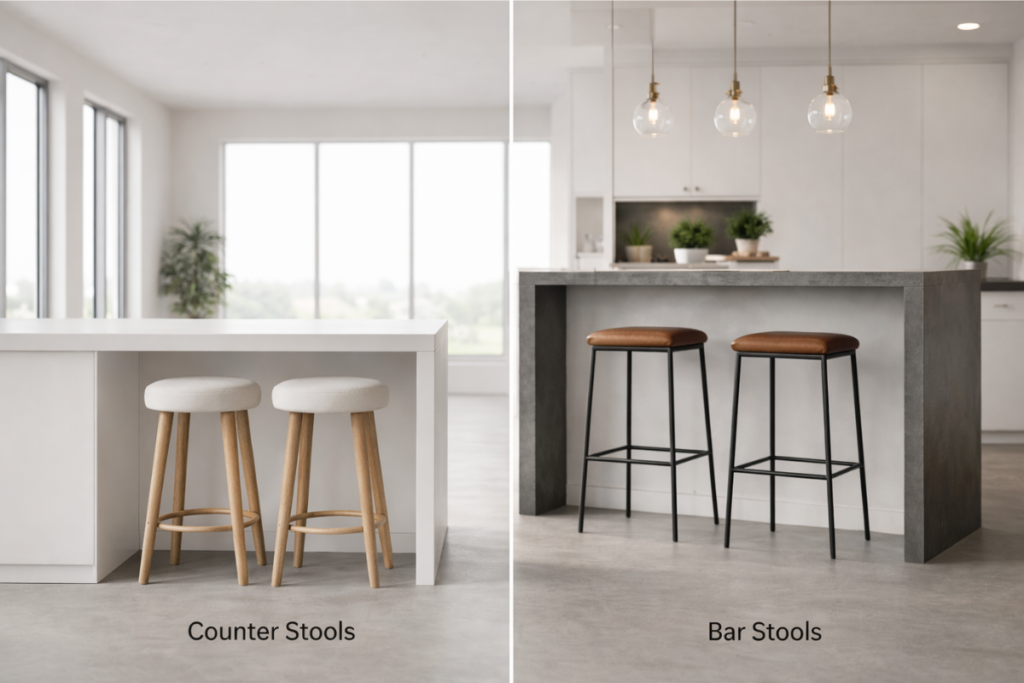
Bar stool vs counter stool confusion always begins with height and that small difference changes everything. They look similar in stores. Even many retailers group them together. But structurally, they are designed for different surface measurements. Choosing the wrong one often results in awkward elbow positioning, limited legroom or seating that simply feels off.
The difference is not decorative. It is dimensional.
A four to six inch mismatch between stool and counter height may seem minor on paper. But when we use them daily, it affects posture, comfort and even the look of space where it’s set up. So, it’s must to understanding the exact height difference between bar stool and counter stool to ensures that seating feels proportionate, not improvised.
The Height Difference Between Bar Stool and Counter Stool
Standard Counter Height
Standard residential counter height measures between 34 and 36 inches from the floor. This dimension is common in kitchen islands and prep surfaces.
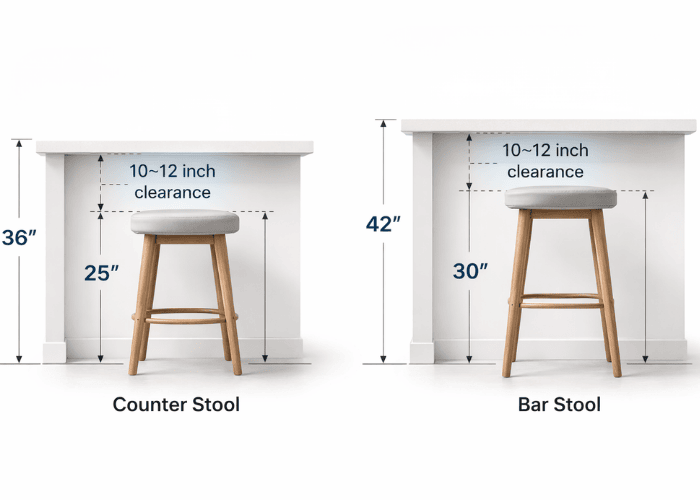
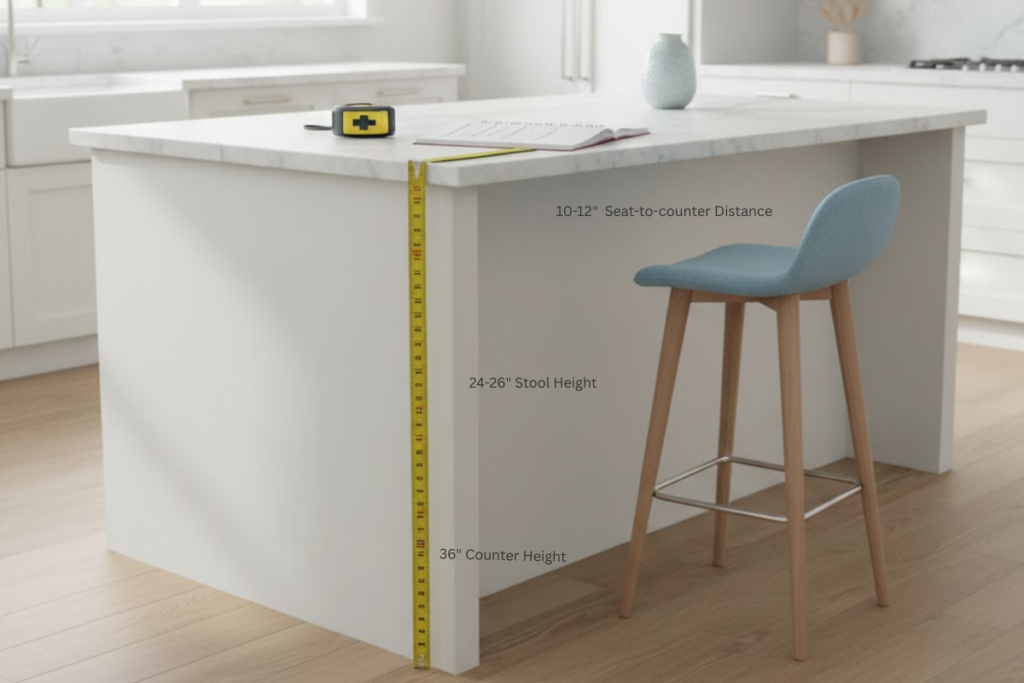
Counter stools designed for this height typically have seat heights between 24 and 27 inches. That range maintains approximately 10 to 12 inches of clearance between the seat and the underside of the counter, which allows natural elbow positioning and comfortable legroom.
This is the most common seating setup in modern kitchens.
Standard Bar Height
Bar height surfaces measure between 40 and 42 inches from the floor. These are often found in raised entertainment bars or pub-style counter extensions.
Bar stools designed for this height usually have seat heights between 28 and 33 inches. Because the seating position is elevated further, footrests become more important for maintaining balance and long-term comfort.
The difference between bar height vs counter height is typically four to six inches — enough to make the two categories incompatible.
Seat Height Chart
| Surface Height | Stool Type | Ideal Seat Height |
|---|---|---|
| 34–36 inches | Counter Stool | 24–27 inches |
| 40–42 inches | Bar Stool | 28–33 inches |
| 43 inches and above | Extra Tall Stool | 33–36 inches |
Height category determines structural fit. Style decisions should come later.
Bar Stool vs Counter Stool Quick Comparison
If you prefer a quick side-by-side summary, the table below highlights the key differences.
| Feature | Counter Stool | Bar Stool |
|---|---|---|
| Designed For | 34–36 inch counters | 40–42 inch bars |
| Typical Seat Height | 24–27 inches | 28–33 inches |
| Seat-to-Counter Clearance | About 10–12 inches | About 10–12 inches |
| Common Location | Kitchen islands | Raised bars, pub counters |
| Visual Presence | Lower profile | Taller, more prominent |
| Footrest Importance | Helpful but less critical | Essential for comfort |
Bar Height vs Counter Height Measurement Rules
Understanding bar height vs counter height is not just about memorizing numbers. It’s about maintaining proportional alignment between the seated body and the surface.
The industry standard guideline is simple:
Surface height minus 10 to 12 inches equals ideal seat height.
This rule exists because most adults sit comfortably when there is approximately 10 to 12 inches between the seat and the underside of the counter. That clearance allows:
• Natural elbow positioning
• Comfortable knee room
• Relaxed shoulder posture
If clearance drops below 9 inches, the counter begins to feel too close. If clearance exceeds 13 inches, the surface feels disconnected and arm positioning becomes awkward.
That small margin determines whether seating feels natural or slightly strained.
Why the 10–12 Inch Rule Works
When seated, the average adult’s forearms rest comfortably when elbows bend at roughly 90 degrees. A 10 to 12 inch clearance range maintains that alignment without lifting shoulders or forcing wrists downward.
This ergonomic alignment is consistent across most residential seating designs.
The difference between bar stool vs counter stool ultimately protects this proportion.
What Happens If You Choose the Wrong Height
Using a bar stool at a 36 inch counter reduces clearance and raises the seated position too high. Knees may press against the underside, and shoulders may elevate while eating or working.
Using a counter stool at a 42 inch bar creates the opposite problem. The surface feels too high, forearms angle upward, and posture feels slightly stretched.
Neither scenario feels dramatic at first. Over time, the discomfort becomes noticeable.
Correct height selection prevents that subtle strain.
The 38 Inch Counter Scenario
Some counters fall between standard categories — often around 37 to 38 inches.
This is where confusion increases.
In these cases, measure precisely and calculate clearance directly rather than relying on labels. If your counter measures 38 inches:
38 minus 11 equals approximately 27 inches.
A 26 to 27 inch seat height may still work comfortably.
This is why understanding measurement logic matters more than relying strictly on “bar” or “counter” labels.
Adjustable Stools and Height Assumptions
Many assume adjustable stools eliminate measurement concerns. They do not.
Adjustable stools still operate within specific height ranges. Always confirm:
• Minimum seat height
• Maximum seat height
• Clearance at both extremes
If the adjustable range does not maintain proper 10–12 inch clearance, the stool will not feel proportionate.
Adjustment flexibility is helpful, but it does not replace correct measurement.
1
Key Measurement Rule
Maintain approximately 10 to 12 inches between the seat height and the counter surface for comfortable alignment.
Why This Height Difference Matters in Daily Use
The difference between bar stool vs counter stool is not just about numbers. It directly affects how the body interacts with the surface during everyday use.
When seat height aligns correctly with counter height, forearms rest naturally, shoulders stay relaxed, and knees clear the underside without pressure.
The seating feels intuitive.
You do not think about it.
When the height is slightly off, the discomfort is subtle but persistent. Shoulders lift while eating. Feet dangle without support. Knees press against the counter edge. Over time, that minor misalignment becomes noticeable.
Bar height vs counter height may differ by only a few inches, but those inches determine whether seating feels balanced or slightly strained.
Proportion protects comfort.
Which One Do You Need
Choosing between bar stool vs counter stool should begin with measurement, not aesthetics.
Start by measuring from the floor to the top of your counter surface. This number determines the category not how the stool looks online.
If your counter measures 34 to 36 inches, counter stools are structurally correct. This is the standard height for most kitchen islands.
If your surface measures 40 to 42 inches, bar stools are required. Anything shorter will feel disconnected from the counter.
For Standard Kitchen Islands
Most residential kitchen islands measure between 34 and 36 inches in height. In this case, counter stools with seat heights between 24 and 27 inches create balanced alignment.
Applied scenario:
A 36 inch island paired with a 30 inch bar stool reduces clearance and raises the seated position too high. The difference may look minor visually, but during daily use elbow positioning becomes uncomfortable and legroom tightens.
A 25 inch counter stool restores proper proportion and natural posture.
Counter height is the correct structural match for most kitchen islands.
For Raised Home Bars
Raised bar sections typically measure 40 to 42 inches. These require bar stools in the 28 to 33 inch seat height range.
Design mismatch warning:
Bar stools are sometimes selected for dramatic visual impact in standard kitchens. However, using bar height seating at a 36 inch counter creates structural imbalance.
The stool may look impressive, but comfort will feel slightly off. Height alignment should determine category before style is considered.
If You Are Still Unsure
When comparing bar stool vs counter stool for non-standard heights, calculate clearance directly.
Surface height minus 10 to 12 inches equals ideal seat height.
This formula removes ambiguity and ensures proportion.
Before making a final decision, it helps to understand how tall bar stools should be for your counter height.
Common Mistakes When Choosing Between Bar Stool and Counter Stool
Most height issues do not come from complex calculations. They come from assumptions. Even small measurement errors can cause long-term discomfort.
Here are the most frequent mistakes people make when deciding between bar stool vs counter stool.
Confusing Overall Stool Height With Seat Height
Many product listings advertise total stool height instead of seat height. The number that matters is the distance from the floor to the top of the seat.
If you compare total height instead of seat height, the stool may arrive significantly taller or shorter than expected.
Always verify the actual seat height in specifications.
Assuming All Kitchen Islands Are Counter/Standard Height
While most kitchen islands measure 34 to 36 inches, not all do. Custom cabinetry, raised breakfast bars, and remodeled kitchens may fall outside standard ranges.
Choosing a counter stool without measuring first is one of the most common errors in the bar stool vs counter stool decision process.
Measure every time, even if the space looks typical.
Ignoring Seat-to-Counter Clearance
The 10 to 12 inch clearance rule is often overlooked.
If clearance is too tight, knees press against the underside. If clearance is too wide, the surface feels too high while seated.
Comfort depends more on clearance than on category labels.
Relying on Adjustable Stools to Fix Incorrect Height
Adjustable stools offer flexibility, but they do not replace correct measurement.
Many adjustable stools do not extend low enough for counter height or high enough for true bar height. Always confirm the adjustment range before assuming it solves the issue.
Adjustment is a feature, not a correction tool.
Choosing Based on Appearance Alone
Bar stools and counter stools often look identical in design. Visual similarity can mislead buyers into thinking the difference is minor.
The difference is structural. A stool that looks perfect but sits two inches too high will always feel slightly uncomfortable.
Proportion should guide the decision before aesthetics.
Frequently Asked Questions (FAQ)
Conclusion
The difference between bar stool vs counter stool is not about appearance. It is about height alignment and proportional comfort. Counter stools are designed for 34 to 36 inch surfaces, while bar stools are built for 40 to 42 inch bars. That distinction protects the 10 to 12 inch clearance range that keeps posture natural and seating comfortable.
When comparing bar height vs counter height, even a small mismatch can affect elbow position, legroom, and long-term usability. Measuring first and selecting the correct seat height ensures the stool fits the counter rather than competing with it.
Once height is correct, design becomes a secondary decision.
Structure determines comfort.
Style should follow proportion.
Best Bar Stools for Kitchen Islands
Choosing the best bar stools for kitchen island setups isn’t as simple as picking what…
The 8 Best Budget Bar Stools Under $200
Good bar stools do not have to cost $300 or more. Many budget bar stools…
How to Measure for Bar Stools
How to measure for bar stools correctly is one of the most important steps when…
How Many Bar Stools Fit at Island?
How many bar stools fit at island seating depends on more than the island length….
How tall should Bar Stools Be
How tall should bar stools be? The correct height depends entirely on the counter surface…
Standard Bar Stool Height Guide
Standard bar stool height is not a style preference. It is a proper measurement rule….