Standard bar stool height is not a style preference. It is a proper measurement rule. When the seat height aligns correctly with the counter surface, posture feels natural, legroom feels comfortable and the space functions as intended. When it does not, even the best-looking stool will feel awkward over time.
In this guide, you’ll learn the exact standard bar stool height in inches, how much clearance you need between seat and counter, how to use a bar stool height chart correctly, and how to measure for bar stools & surface before buying. The goal is simple, choose the correct height once and avoid costly mistakes. The correct bar stool height depends on your counter height, seat clearance, and spacing. Getting this right improves both comfort and usability.
To understand everything beyond just height, read our complete bar stools guide.
What Is the Standard Bar Stool Height?
Standard bar stool height depends on the surface it is paired with. In residential settings, bar height counters typically measure between 40 and 42 inches from the floor.
To maintain comfortable seating clearance, bar stools designed for these counters normally measure between 28 and 33 inches in seat height.
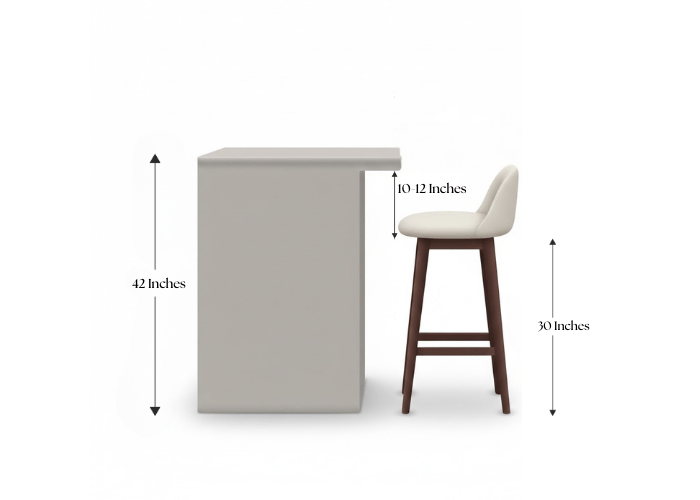
This range protects the recommended 10 to 12 inches of space between the seat and the underside of the counter. That clearance allows forearms to rest naturally without raising shoulders or compressing knees. When people ask about standard bar stool height, they are usually referring to this 28 to 33 inch range.
If you are unsure whether your counter is bar height or counter height, read our bar stool vs counter stool guide.
Latest Measurement Standards
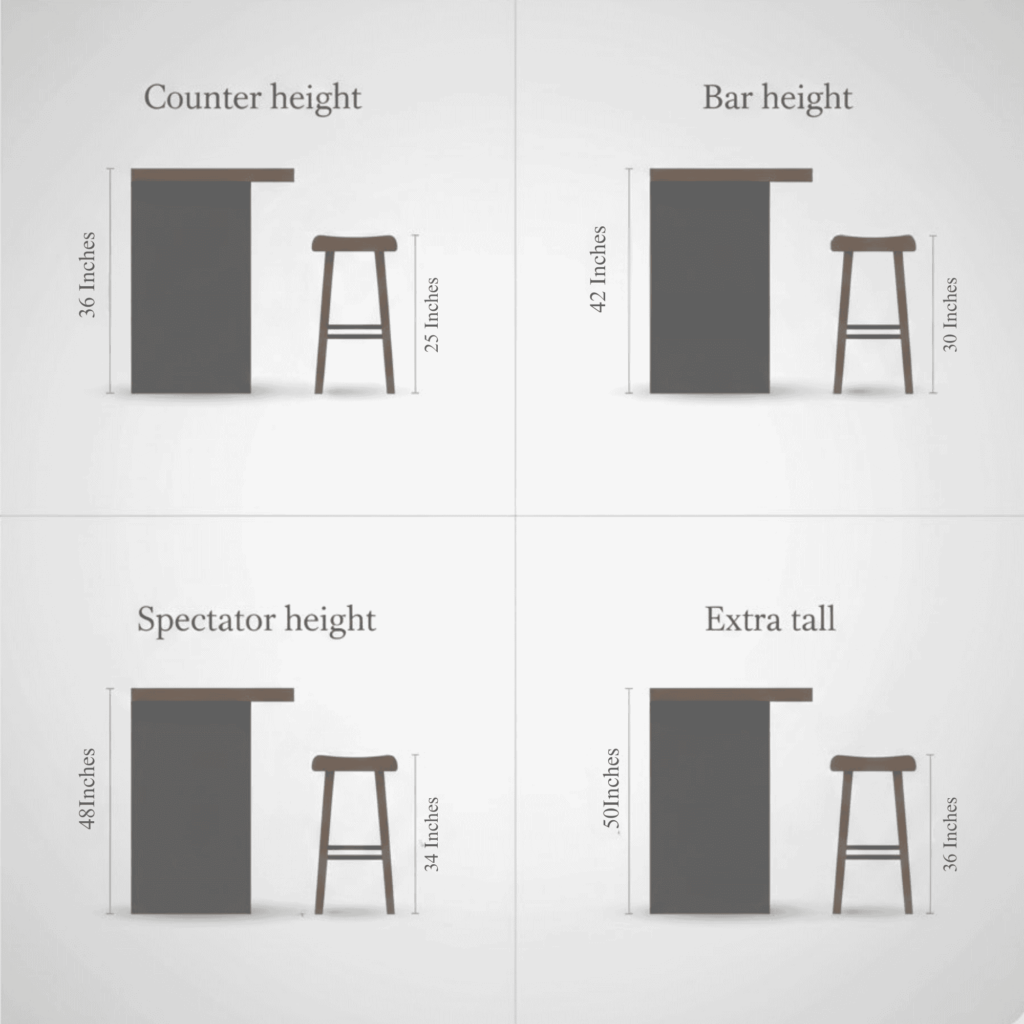
While measurements can vary slightly by manufacturer, the following ranges are widely accepted as standard bar stool height guidelines:
• Counter height surfaces measure 34 to 36 inches from floor to surface. Ideal seat height is 24 to 27 inches.
• Bar height surfaces measure 40 to 42 inches. Ideal seat height is 28 to 30 inches.
• Spectator height surfaces measure 46 to 48 inches. Ideal seat height is approximately 34 inches.
• Extra tall surfaces measure around 50 inches. Ideal seat height is 36 to 37 inches.
These ranges maintain approximately 10 to 12 inches of clearance between the seat surface and the underside of the counter, which supports proper posture and elbow alignment.
For a more detailed breakdown of these measurements, see our full bar stool height guide.
Ideal Seat-to-Counter Distance
The most reliable formula is: Surface height minus 10 to 12 inches equals ideal seat height.
For example: 42-inch bar minus 11 inches equals approximately 31-inch stool. This range keeps elbows near a 90-degree angle while seated. If clearance drops below 9 inches, knees feel cramped. If it exceeds 13 inches, the surface feels disconnected.
That is why bar stool height must be calculated rather than guessed.
The standard bar stool height for a 42-inch bar surface is typically 28 to 30 inches. For counter height surfaces measuring 34 to 36 inches, stools between 24 and 27 inches maintain correct proportion.
The key is not the name of the stool but the clearance between seat and counter.
Bar Stool Height Chart
If you prefer a quick reference, the bar stool height chart below summarizes the standard ranges.
| Surface Height | Recommended Stool Height | Typical Use |
|---|---|---|
| 34–36 inches | 24–27 inches | Counter height islands |
| 40–42 inches | 28–33 inches | Bar height counters |
| 43+ inches | 33–36 inches | Extra tall or spectator seating |
This bar stool height chart reflects common residential measurements and supports proper seat-to-counter clearance.
Right Stool Height for 36-Inch Counter
For a 36-inch counter, stool seat height should range between 24 and 26 inches. A 27-inch stool may work in some cases, but clearance becomes tighter.
A 30-inch stool at a 36-inch counter leaves only 6 inches of clearance, which feels restrictive and forces elbows upward.
Even a 2-inch difference in seat height significantly changes comfort.
Right Stool Height for 42-Inch Bar Counter
For a 42-inch bar counter, ideal stool height falls between 28 and 30 inches. A 29-inch stool often provides balanced clearance, while 30 inches offers slightly more presence visually.
Anything lower than 27 inches will create excessive clearance and an awkward seating posture. Anything taller than 31 inches may reduce clearance below the recommended range.
Maintaining proper seat-to-counter clearance ensures long-term comfort rather than temporary visual alignment.
Common Bar Stool Height Mistakes
Using a 30-Inch Stool for a 36-Inch Counter
This is one of the most common errors. A 30-inch seat height paired with a 36-inch counter leaves only about 6 inches of clearance.
Assuming all Counters are Exactly 36 or 42 Inches
Always measure. Custom counters vary.
Ignoring Seat-to-Counter Clearance
Maintain 10–12 inches gap.
Relying only on Adjustable Mechanisms
They must still match correct range.
Spectator Height Stools (34 Inches)
Spectator height stools are designed for taller surfaces measuring approximately 46 to 48 inches. The standard seat height is around 34 inches.
These are commonly used for raised bars, pub-style tables or multi-level kitchen islands. While less common in residential kitchens, they are important for specialty installations.
Always verify the exact surface height before choosing spectator height seating.
Extra Tall Stools (33-36 Inches)
Extra Tall Stools are very rare in residential kitchens but quite important for non-standard layouts. Extra tall stools are used for:
• 43 to 46 inch surfaces
• Commercial or spectator seating
• Game room bars
How to Measure Your Counter for the Right Bar Stool Height
Correct measurement prevents most mistakes so it’s important to do proper measurements instead of guesswork.
Legroom Formula
Measure from the floor to the top of the counter surface, then subtract 10–12 inches to determine ideal seat height.
Example:
44-inch custom bar minus 11 inches equals 33-inch stool.
Distance From Floor to Counter
Always measure directly instead of doing guess work or visual estimate.
Custom cabinetry may measure:
• 37 inches
• 38 inches
• 44 inches
If your counter measures 38 inches. 38 minus 11 equals approximately 27 inches.
In that case, a taller counter stool may work better than a full bar stool.
Ideal Stool Spacing
Height alone does not ensure comfort. So it’s better to allow at least:
• 24 inches of horizontal space per stool
• 26–28 inches if stools have arms
Overcrowding actually make even the correct bar stool height feel uncomfortable.
For example: If your counter measures 41 inches from floor to surface, subtract approximately 10 to 12 inches. That places your ideal seat height between 29 and 31 inches. Always calculate using actual measurement rather than assuming a surface is ‘standard’.
To calculate how many stools your island can fit, read our how many bar stools fit at island guide.
Use this quick calculator if you prefer an instant answer instead of manually subtracting measurements.
Bar Stool Height Calculator
Enter your counter height in inches:
For exact step-by-step measuring, check our how to measure for bar stools guide.
Common Mistakes People Make When Choosing Bar Stool Height
Even with a height chart, errors happen. In order to avoid mistakes always keep in mind:
- Buying Stools that are too Tall
Many buyers assume higher is better and choose a 30-inch stool for a 36-inch counter. This reduces clearance below 10 inches and creates cramped legroom. Always calculate based on surface height rather than guessing.
- Ignoring Seat-to-Counter Clearance
Even if the stool looks proportional, insufficient clearance can make sitting really uncomfortable over time. The ideal gap is approx. 10 to 12 inches. Anything significantly below or above that range disrupts comfort.
- Assuming all Counters are Standard Height
See, not all kitchen islands measure exactly 36 inches. Custom builds often vary by an inch or two. Always measure from floor to surface before selecting bar stool height in inches.
- Adding too many Stools
Proper spacing matters as much as height. Crowding stools along an island reduces comfort and restricts movement. Plan for approximately 24 inches of horizontal space per seat. If you're unsure how many stools your island can comfortably support, see our guide on how many bar stools fit at a kitchen island for spacing recommendations by island length.
Many of these mistakes happen when height and spacing are not planned together. See our bar stools guide for a complete setup.
Frequently Asked Questions (FAQ)
Conclusion
Standard bar stool height is determined by proportion, not preference.
For 42-inch bar surfaces, seat height should be between 28 and 30 inches. For 34 to 36 inch counters, stools between 24 and 27 inches maintain proper alignment. Maintaining approx. 10 to 12 inches of clearance between the seat and the underside of the counter ensures balanced posture and long-term comfort.
Before purchasing, measure the exact height of your surface and select a stool that fits that measurement precisely. When bar stool height in inches aligns correctly with the counter, the seating feels natural and integrated rather than forced.
If you’re exploring different styles, materials, or configurations beyond height alone, see our complete guide to bar stools for a broader breakdown of types and use cases.
If you want a complete breakdown of styles, materials, and buying tips, explore our bar stools guide.
Ergodyne ProFlex 850 Review: 7 Things to Know Before You Buy
Quick Answer The Ergodyne ProFlex 850 Insulated Freezer Gloves are a good pick for cold...
The 6 Best Fog Free Shower Mirror for Shaving
Quick Answer The best fog free shower mirror for most people is the ToiletTree Deluxe...
11 Best Plastic Free Electric Kettles for Safe Brewing
Quick Answer The closest option to a truly plastic free electric kettle is the SAKI...

16 Amazing Gifts That Start With the letter J
Quick Answer The best gifts that start with the letter J for most occasions are...

Best Prime Day Home Deals — Up to 50% Off Today Only
-DAYS-HOURS-MINUTES-SECONDS ⏰ Prime Day ends tonight at midnight (June 26). Every deal on this page...

The 5 Best Kitchen Deals on Amazon Right Now
Live Now — Ends June 26. These are the best kitchen deals on Amazon active...